

Article
How HCA Healthcare prepares for emergencies: Meet the Enterprise Response Teams


TAGS:
Share:
Key takeaways:
- HCA Healthcare takes an enterprise-wide approach to emergency preparedness and response, preparing year-round for natural disasters, man-made emergencies and infrastructure disruptions through its Enterprise Emergency Operations Center (EEOC) and specialized Enterprise Response Teams (ERTs).
- HCA Healthcare’s ERTs bring together clinicians, operational leaders and specialized experts in neonatal intensive care unit (NICU) transport, physician response, nursing, engineering, supply chain and mental health.
- Through advance planning, training, coordination and lessons learned from real-world events, the EEOC and ERTs help hospitals maintain continuity of patient care, support frontline caregivers and mobilize specialized expertise when it is needed most.
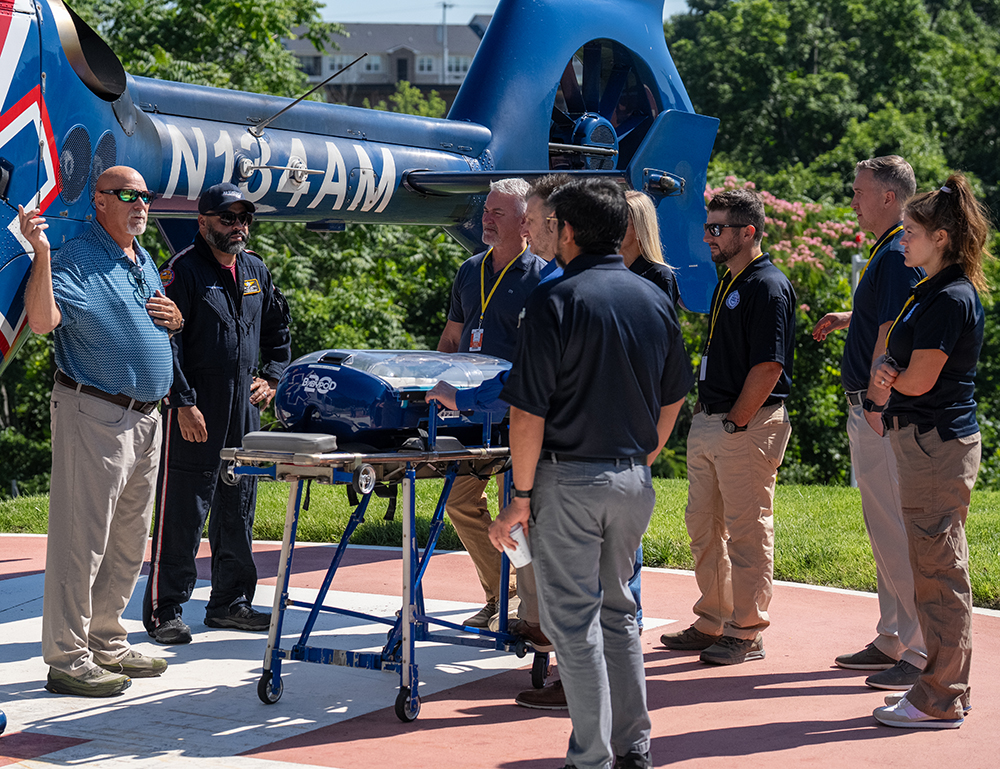
Emergencies can change the conditions in which a hospital operates in an instant. What they do not change is the need to care for patients.
That makes emergency preparedness in healthcare a continuous responsibility — one that requires organizations to think beyond the immediate event to the systems, expertise and coordination needed to sustain care through disruption and recovery.
Whether facing a hurricane, flood, wildfire, severe winter storm, volcanic eruption or man-made emergency, HCA Healthcare’s focus is on maintaining that continuity while responding to conditions that can evolve quickly and create very different needs from one facility or community to another.
An enterprise approach to emergency preparedness and response
At the center of that work is HCA Healthcare’s Enterprise Emergency Operations Center (EEOC). When activated, the EEOC brings together leaders and subject matter experts from across the organization to monitor evolving conditions, coordinate resources and help facilities make informed decisions in real time.
The model is designed around a fundamental reality of complex emergency response: No single discipline can address every challenge a hospital may face. A facility may need clinical support at the same time it is managing infrastructure, supply, transportation or workforce needs. An enterprise approach allows HCA Healthcare to draw on people, expertise and resources from across the organization as those needs evolve.

“Putting patients first means being prepared to care for them no matter what circumstances our hospitals and communities may face,” said Melissa Harvey, vice president of Enterprise Emergency Operations. “Our responsibility is to anticipate what our caregivers may need, remove barriers wherever we can and bring the full strength of HCA Healthcare together so our teams can remain focused on what matters most — caring for our patients.”
A critical part of that model is HCA Healthcare’s Enterprise Response Teams (ERTs). Made up of clinicians, operational leaders and specialists who volunteer to train for and respond to complex events, ERTs provide focused expertise that can be mobilized before, during and after an emergency.
HCA Healthcare’s specialized response teams include:
- Mental Health Response Team
- Engineering Response Team
- Incident Management Team
- Incident Support Team
- Neonatal Intensive Care Unit (NICU) Transport Response Team
- Physician Response Team
- Supply Chain Response Team
Together, these teams reflect the interconnected nature of hospital operations during an emergency. Patient care may depend not only on having clinicians available, but also on functioning utilities, access to supplies, safe patient transportation, infection prevention expertise, mental health resources and timely information.
The model also continues to evolve. Real-world responses can identify new needs and barriers. Training can expose challenges before an emergency occurs. And lessons learned can be incorporated into the next response — turning experience into greater readiness.
Behind these capabilities are colleagues who choose to prepare for difficult circumstances and use their expertise to help others. The experiences of the four HCA Healthcare colleagues below show what those principles look like in practice.
Protecting the infrastructure behind patient care: Jacob Claudio
Facility Maintenance Mechanic, HCA Florida Northside Hospital | Incident Support Team
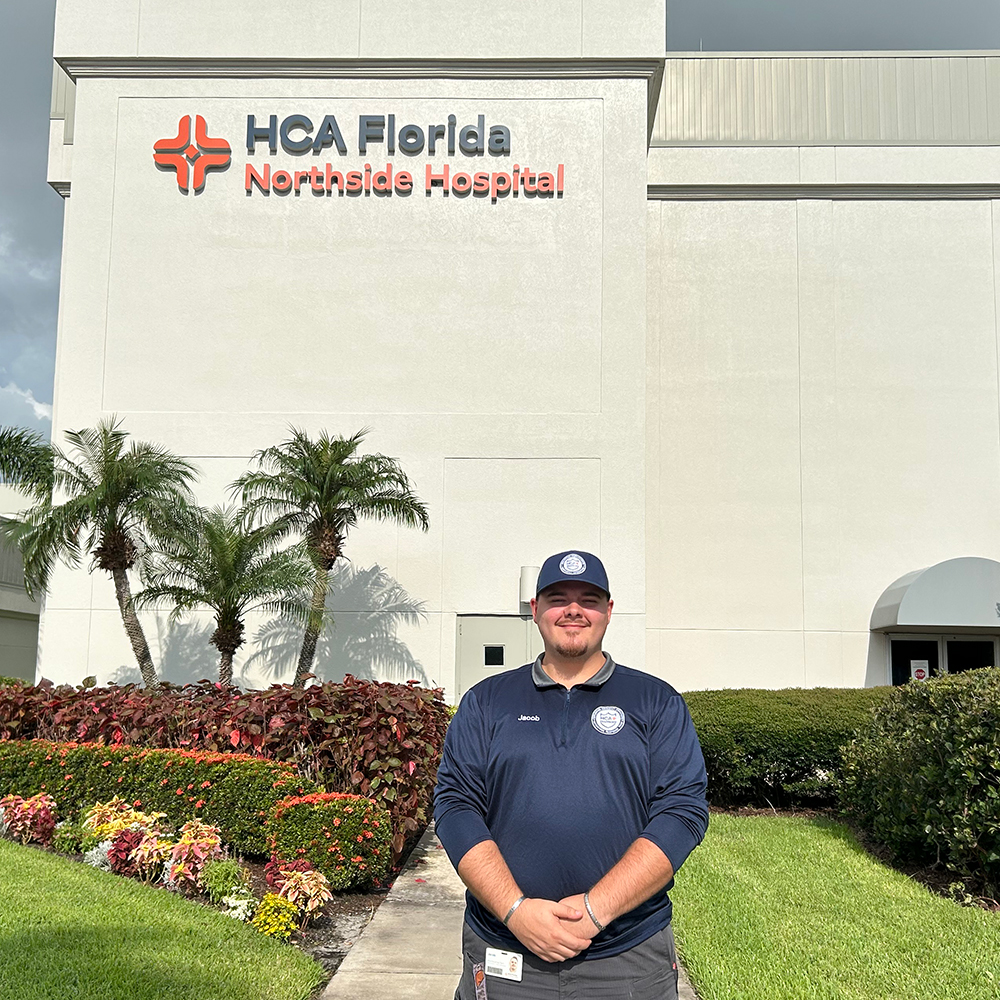
When Hurricanes Helene and Milton made landfall in Florida in 2024, Jacob Claudio spent six days helping keep HCA Florida Northside Hospital in St. Petersburg operational so colleagues could continue delivering uninterrupted patient care amid deteriorating conditions.
“Seeing the level of coordination, commitment and support behind the scenes opened my eyes to what the Enterprise Response Teams do and how much impact that team can have during a crisis,” Jacob said.
The experience also showed him that emergency response continues long after the immediate danger passes. “Emergency response is not only about the immediate event, but also about recovery, continuity of care and making sure patients can keep receiving the treatment they need,” he said.
Inspired to contribute on a broader scale, Jacob officially joined one of HCA Healthcare’s ERTs in June 2025. He now serves on the Incident Support Team while continuing his role as a facility maintenance mechanic at HCA Florida Northside Hospital.
Jacob’s background in background gives him a firsthand understanding of the infrastructure required to deliver patient care. Critical hospital systems — including water, power and HVAC — can affect operations across multiple departments, requiring him to troubleshoot quickly, stay calm under pressure and anticipate how one disruption may affect another.
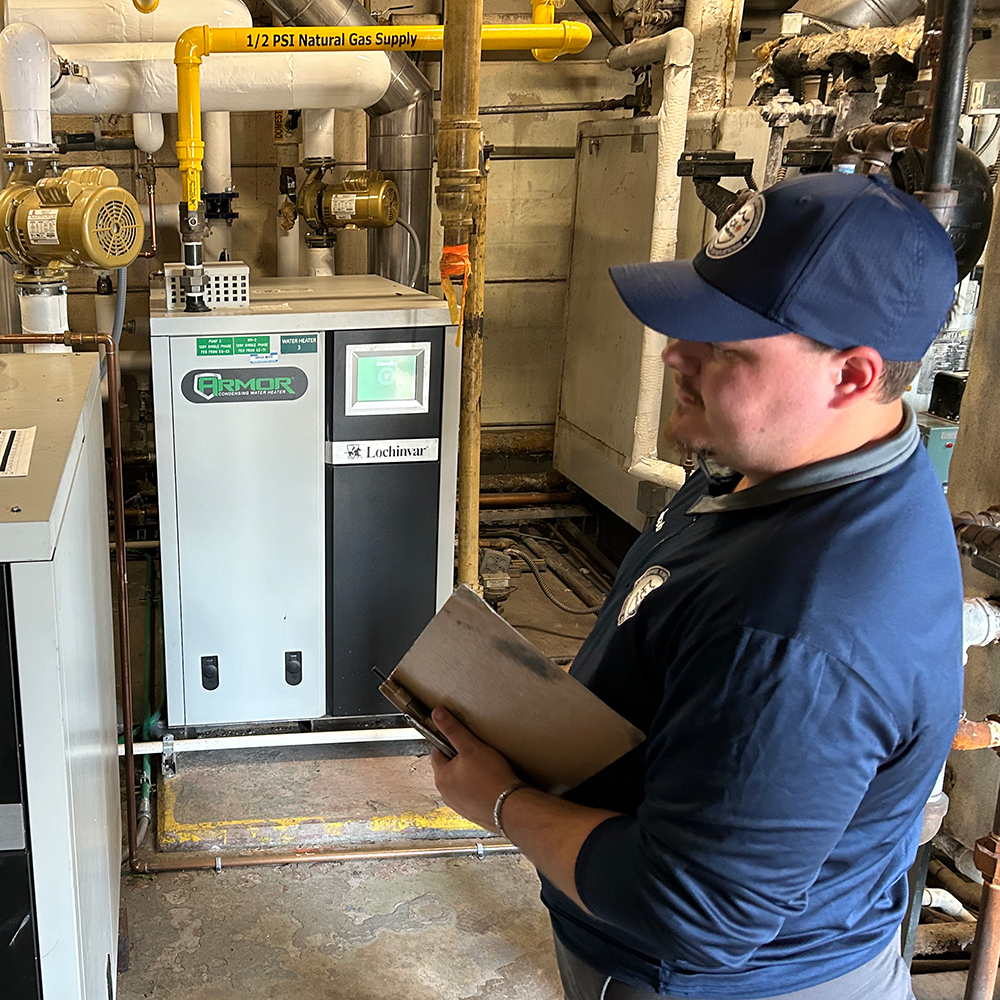
Jacob has also seen the importance of timely information during a response. “A lot of the most important work happens through coordination, documentation, communication and making sure the right people have the right information at the right time,” he shared.
It is work Jacob says begins long before a team is called to respond. “When a response looks organized, it is because a lot of people have spent time preparing for moments they hope never happen,” he said. “Facilities, support departments and response teams may not always be visible, but their work helps create the foundation that allows patient care to continue when conditions are challenging.”
“I am proud to be a part of HCA Healthcare because I get to work alongside people who show up when it matters most.”
Jacob Claudio, Facility Maintenance Mechanic, HCA Florida Northside Hospital
Preparing for the human impact of a crisis: Doug Overall
Lead Chaplain and Volunteer Coordinator, Overland Park Regional Medical Center | Mental Health Response Team
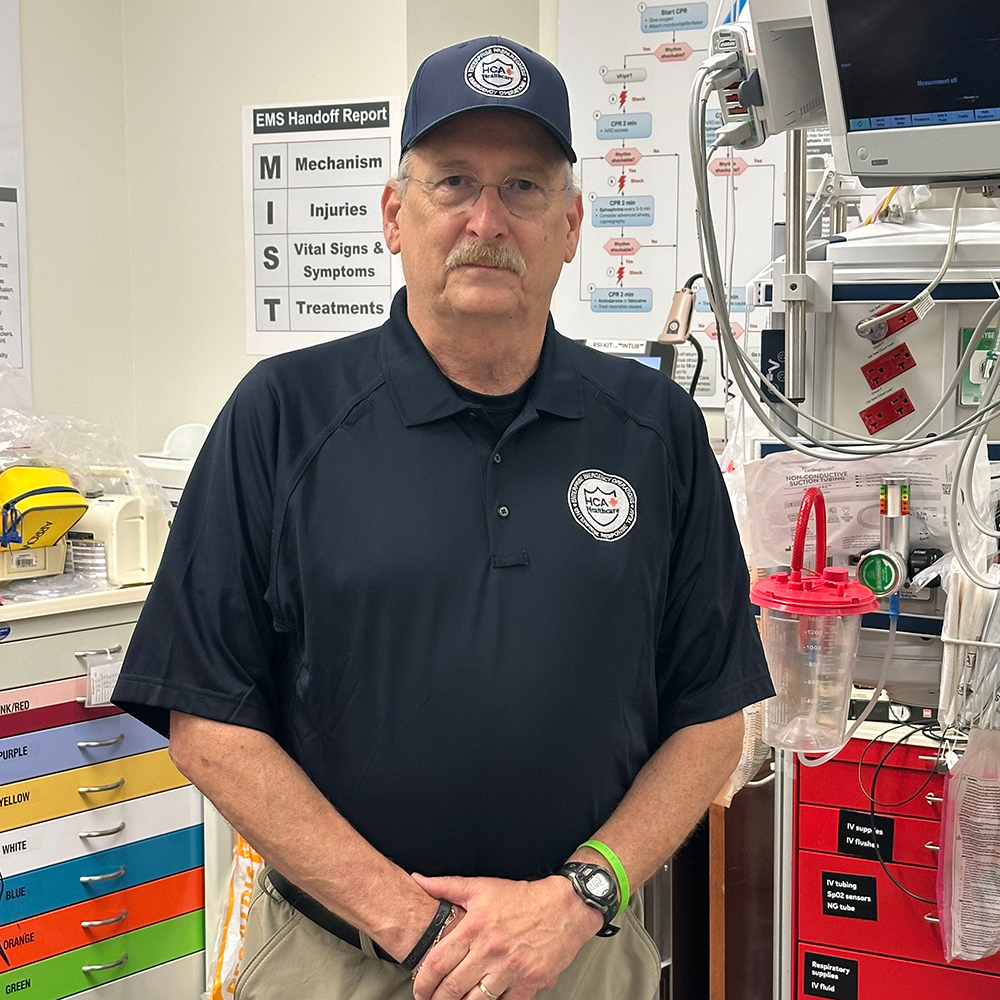
Supporting people through crisis has been the focus of Doug Overall’s chaplaincy career spanning nearly 40 years. Today, as lead chaplain and volunteer coordinator at Overland Park Regional Medical Center in Overland Park, Kansas, he is helping bring that experience to HCA Healthcare’s growing Mental Health Response Team.
Doug joined HCA Healthcare in July 2024 and soon began asking how chaplains could support the organization’s emergency response efforts. Those conversations helped lead to the selection of 12 HCA Healthcare chaplains who are now training alongside the mental health experts within the Mental Health Response Team for future deployments.
The work builds on decades of experience supporting patients, families, healthcare workers and first responders through traumatic events. Doug began his chaplaincy training in Washington, D.C. and later served with law enforcement agencies and in hospital systems in several states. His experiences included line-of-duty deaths, workplace violence and the 1999 Columbine High School shooting.
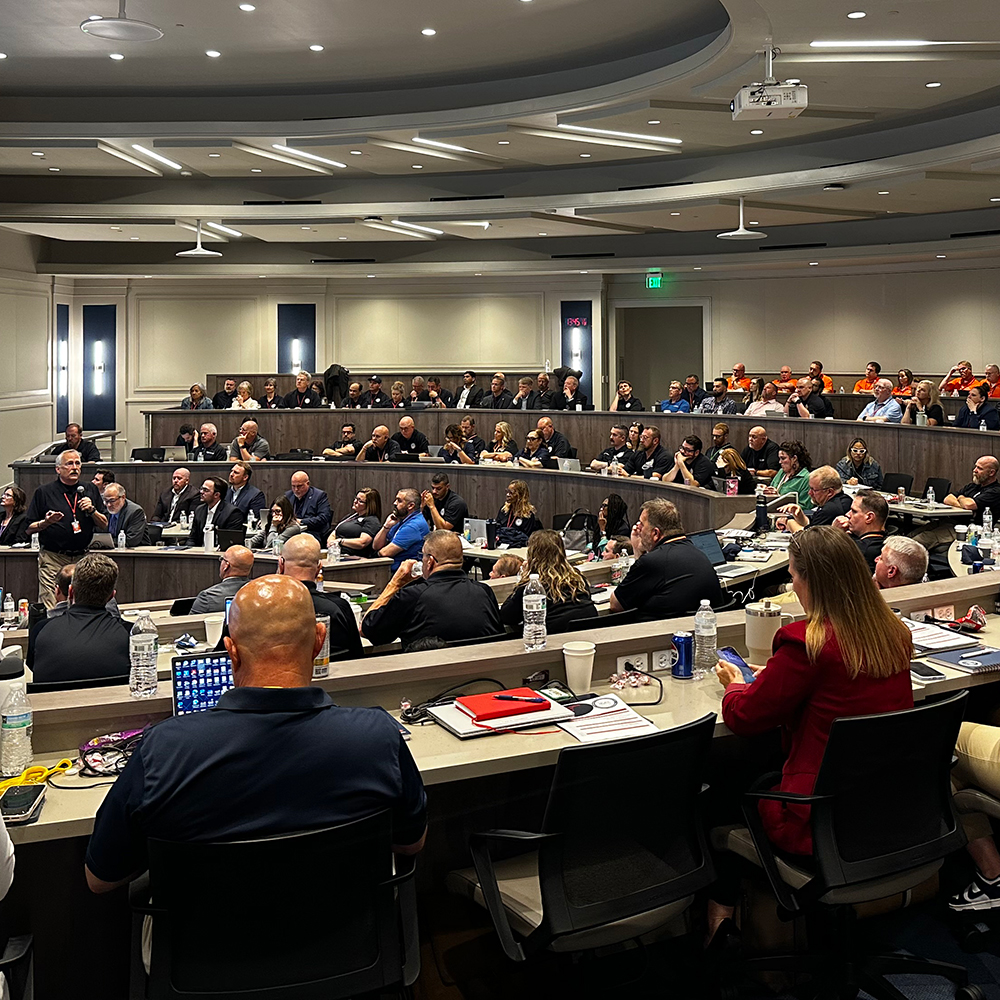
Doug has also deployed with disaster relief organizations following flooding in Michigan and Kentucky and the devastating 2023 earthquake in Turkey. Across those experiences, he has seen firsthand how the effects of a crisis can continue after immediate physical needs have been addressed.
“We show up with a host of services, equipment, technology, supplies and numerous teams,” Doug said. “But those patients, families, communities and our employees are the ones that can experience post-traumatic stress reactions and losses that may benefit from having additional mental health and chaplaincy support.”
Within the Mental Health Response Team, chaplains can complement mental health expertise through presence, compassionate listening and other forms of support. Doug says that care extends to the responders themselves, who may also carry the emotional effects of working through a crisis.
As the team continues to develop, Doug says what makes him proud can be summed up in one word: “Love” — for the work, for those HCA Healthcare serves and for the colleagues who are ready to show up for one another when it matters most.
Preparing to move highly vulnerable patients safely: Terry Valentino
Regional Vice President of Medical Transport, HCA Healthcare’s American Group | NICU Transport Response Team

Some emergencies create another complex challenge: safely transporting critically ill patients while their care must continue.
As a leader within HCA Healthcare’s NICU Transport Response Team, Terry Valentino helps ensure our organization’s tiniest and most fragile patients can be safely transported during emergencies and large-scale incidents.
As the son of two nurses, Terry grew up hearing how compassionate care could change lives. “Healthcare has always been a part of my life,” Terry said. “Hearing my parents’ stories about caring for patients and making a difference in people’s lives inspired me from an early age.”
Since the NICU Transport Response Team was established in 2022, Terry has helped design, develop and implement the program in partnership with HCA Healthcare’s EEOC. He currently helps lead the team while also serving as Regional Vice President of Medical Transport for HCA Healthcare’s American Group, overseeing transport programs across Texas, Colorado and a portion of Kansas.
Since the team’s inception, Terry has supported his NICU Transport Response Team teammates who deployed during Hurricanes Idalia, Beryl and Milton, by coordinating resources, communication and logistics for clinicians in the field. “Behind every deployment is a larger team working to remove barriers and enable our frontline caregivers to focus on delivering exceptional patient care during a time of crisis,” he said.
Much of the team’s work happens before a deployment is ever needed. Team members prepare for hurricanes, floods, severe winter weather and other emergencies by developing response plans, identifying resources, training and maintaining readiness.
“Being ready — even when deployment is never required — is one of the most important ways we support our patients, our hospitals and our caregivers.”
Terry Valentino, Regional Vice President of Medical Transport, HCA Healthcare’s American Group
Safely moving NICU patients requires close coordination among emergency operations, patient logistics, medical transport, bedside teams, receiving hospitals and highly trained neonatal clinicians. It also requires specialized equipment and technology that allow care to continue throughout transport.
Terry is especially proud of the clinicians who volunteer to serve while balancing full-time roles, families and personal responsibilities. “Their willingness to serve whenever called upon is a testament to their professionalism, selflessness and commitment to providing the highest level of care to our most vulnerable patients,” he said.
For Terry, the NICU Transport Response Team reflects what HCA Healthcare does best: bringing teams together to deliver specialized care wherever and whenever patients need it most.
Turning lessons learned into greater readiness: Dr. Trevor Eide
Regional Chief of Emergency Medicine, HCA Healthcare’s Capital Division
Chief of Emergency Medicine, Portsmouth Regional Hospital | Physician Response Team

For Dr. Trevor Eide, emergency response work is about making sure the right clinical support can reach a hospital when it is needed most — and using lessons from each response to improve the next.
Dr. Eide serves as Regional Chief of Emergency Medicine for HCA Healthcare’s Capital Division and Chief of Emergency Medicine at Portsmouth Regional Hospital in Portsmouth, New Hampshire. He also helped lead the development of HCA Healthcare’s Physician Response Team, an ERT resource designed to deploy physicians and advanced practice providers to support hospitals during emergencies.
The idea grew out of Dr. Eide’s experience responding to HCA Healthcare’s Mission Hospital after Hurricane Helene devastated Western North Carolina in 2024. The experience reinforced the value of having a dedicated team of clinicians prepared in advance to mobilize when additional support is needed. That insight helped inform the development of a more structured approach to physician response.
“Since then, we’ve developed a dedicated team of providers and leaders throughout the organization who are working together to streamline future deployments so we can have the most impact when needed.”
Today, the Physician ERT includes 27 physicians and advanced practice providers with a range of backgrounds and skills. Preparing them requires planning for the diverse challenges HCA Healthcare facilities may face, from hurricanes in Florida to volcanic activity in Alaska. Annual ERT training also gives members an opportunity to learn from experienced emergency response leaders and better understand the resources available across the organization.
For Dr. Eide, the evolution of the team demonstrates how experience in one emergency can strengthen readiness for the next.
Dr. Eide’s own path to medicine began during college, when he worked as a hiking guide and Wilderness EMT in New Hampshire’s White Mountains. “I found a passion for caring for people in their most stressful moments,” he said.
What has been most meaningful to him is the number of clinicians, executives and ERT leaders who have volunteered their time to help build the program. For others interested in emergency response work, his message is simple: “Your expertise is valuable to your community.”
And when it comes to HCA Healthcare, Dr. Eide says he is proud to be part of an organization that is “always striving to improve the care we provide our patients while supporting one another to do our best work.”
Building readiness before it is needed
The circumstances surrounding the next emergency may be impossible to predict precisely. The need to prepare for it is not.
For HCA Healthcare, readiness is built through a continuous cycle of planning, training, responding and learning — strengthening our ability to support caregivers and care for patients when it matters most.
You may also like...


About HCA Healthcare
HCA Healthcare, one of the nation's leading providers of healthcare services, is comprised of 189 hospitals and more than 2,600 ambulatory sites of care, including surgery centers, freestanding emergency rooms, urgent care centers and physician clinics, in 19 states and the United Kingdom. Our approximately 320,000 colleagues are connected by a single purpose — to give patients healthier tomorrows.
As an enterprise, we recognize the significant responsibility we have as a leading healthcare provider within each of the communities we serve, as well as the opportunity we have to improve the lives of the patients for whom we are entrusted to care. Through the compassion, knowledge and skill of our caregivers, and our ability to leverage our scale and innovative capabilities, HCA Healthcare is in a unique position to play a leading role in the transformation of care.
Recent articles