

Article
Stroke warning signs: HCA Healthcare stroke survivors share why it’s important to B.E. F.A.S.T.


TAGS:
Share:
During Stroke Awareness Month, HCA Healthcare is highlighting the importance of recognizing stroke symptoms and acting quickly. If you or someone near you were having a stroke, would you know the warning signs? Approximately 800,000 people in the U.S. have a stroke each year, making stroke a leading cause of serious long-term disability and the fourth-leading cause of death for Americans, according to the American Heart Association.
So what exactly is a stroke? A stroke occurs when normal blood flow to the brain is interrupted. The longer treatment is delayed, the greater the risk of lasting damage. Strokes can happen to people of all ages — even those without known risk factors.
“When a stroke happens, every minute matters. The faster someone gets treatment, the better the chance of saving brain function. On average, nearly 2 million brain cells die every minute a stroke goes untreated. Early treatment improves survival rates and reduces disability.”
Dr. Adrian Jarquin-Valdivia, neurologist at HCA Healthcare’s TriStar Centennial Medical Center and American Stroke Association volunteer expert
HCA Healthcare has a long-standing commitment to patient safety and continuously improving stroke care. In 2025, HCA Healthcare achieved a median door-to-needle time — the time between a patient arriving at the hospital and receiving clot-busting medication — of 33 minutes, 45% faster than the national benchmark of 60 minutes for stroke treatment. This performance reflects the systems and best practices implemented across the organization, including strategies developed at top-performing stroke centers such as dedicated stroke “launch pads” in emergency departments and enhanced communication with EMS teams during patient transport.
How to recognize stroke warning signs with B.E. F.A.S.T.
It’s important to recognize the signs and call 911 immediately, so they receive the right treatment, right away. Remember to B.E. F.A.S.T., and it may help you recognize the signs of a stroke.
- B — Balance loss: Sudden trouble walking, dizziness or loss of coordination
- E — Eye (vision) changes: Sudden vision loss or trouble seeing in one or both eyes
- F — Face drooping: One side of the face droops or feels numb; a smile may look uneven
- A — Arm weakness: One arm feels weak or numb or drifts downward when raised
- S — Speech difficulty: Slurred speech or trouble speaking
- T — Time to call 911: If someone shows any of these signs, even if symptoms go away, calling 911 right away can help get lifesaving care started. Noting when symptoms first appeared can also support treatment decisions.
Each person may experience stroke symptoms differently, so it is important to seek medical care if any of these signs are present, especially if paired with the sudden onset of numbness, confusion or severe headache, or if someone has a condition that increases stroke risk.
According to the American Heart Association, approximately 80% of strokes are considered preventable. Identifying personal risk factors — including uncontrolled high blood pressure, diabetes, obesity and atrial fibrillation (AFib) — can help you have informed conversations with your healthcare team about stroke prevention and long‑term brain health.
Getting to the Heart of StrokeTM
Recognizing the warning signs of stroke is only one part of improving outcomes. Prevention, early diagnosis and coordinated follow-up care also play an important role in helping patients reduce their risk and recover after a stroke.
Last year, HCA Healthcare and the HCA Healthcare Foundation expanded our collaboration with the American Heart Association on their Getting to the Heart of Stroke™ initiative. This builds upon the collaboration announced in 2022 focused on:
- increasing collaboration between cardiology and neurology through identifying and disseminating quality improvement best practices;
- educating healthcare professionals about the latest clinical guidelines and science;
- empowering individuals to know and better manage their risk factors; and
- improving community awareness that stroke is largely preventable, treatable and beatable.
With this expanded collaboration, the initiative has reached millions of people with education on AFib and stroke risk and strengthened our relationships with more than 160 community organizations. Additionally, the participating Getting to the Heart of Stroke™ hospitals significantly improved identification of the cause of stroke by 33%, through care team collaboration, best practice sharing and increased utilization of evidence-based diagnostic testing.
Behind every stroke statistic is a person, a family and a moment when recognizing the warning signs changed everything. These stroke survivors are sharing their experiences to encourage others to act quickly when every minute counts.
Texas ER nurse becomes a stroke patient at the hospital where she works
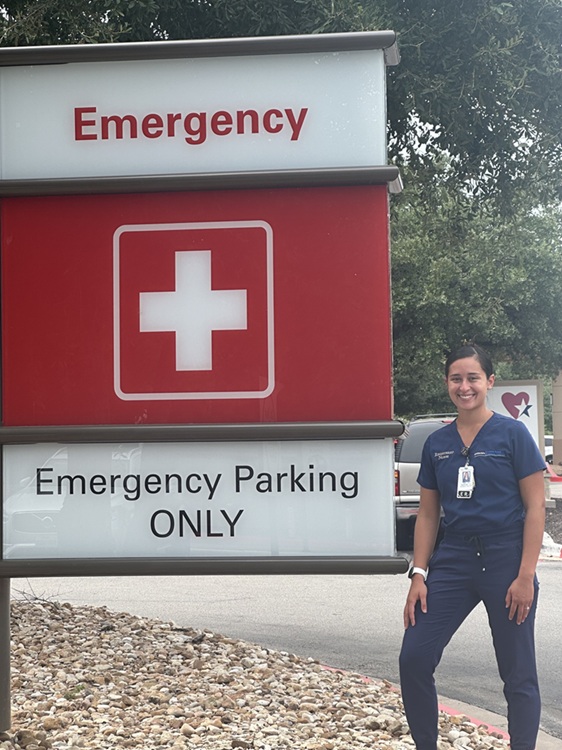
When 24-year-old HCA Healthcare emergency room nurse Alex Wilson-Garza suffered an unexpected ischemic stroke, it was her own colleagues at St. David’s Round Rock Medical Center in Texas who helped save her life. An ischemic stroke, the most common type of stroke, occurs when a clot obstructs the flow of blood to the brain.
Alex was spending her day off with her husband before attending their usual jiu-jitsu class when she began feeling dizzy, slurring her words and experiencing facial drooping. Her husband immediately recognized the symptoms as common warning signs of a stroke.
He insisted on taking her to the hospital where she worked, just two minutes away. At first, Alex resisted because she didn’t want to see her coworkers when she was in such a vulnerable state.
“I was really scared because as nurses we spend our entire job taking care of other people,” Alex told the American Heart Association. “But it’s really hard for nurses to step back and take care of themselves. We think we’re invincible. I was in denial that there was something wrong with me. Even though I had this intuition that there was something wrong, I just didn’t want to admit it.”
Once she arrived in the emergency room, her fears were eased. One of the first faces she saw was emergency services nurse manager Brittany Elrod. Alex’s colleagues, including Brittany, immediately began lifesaving protocols to treat Alex’s stroke.
Today, Alex is back to her normal routine: staying active and caring for patients at St. David’s Round Rock Medical Center alongside the colleagues who saved her life. “To see Alex thriving and back to her normal self is incredible,” Brittany shared. As a member of the 2026 Go Red for Women Class of Survivors, Alex continues to share her story and encourage others to know the warning signs of a stroke.
Training for the NFL Combine, he never expected a stroke
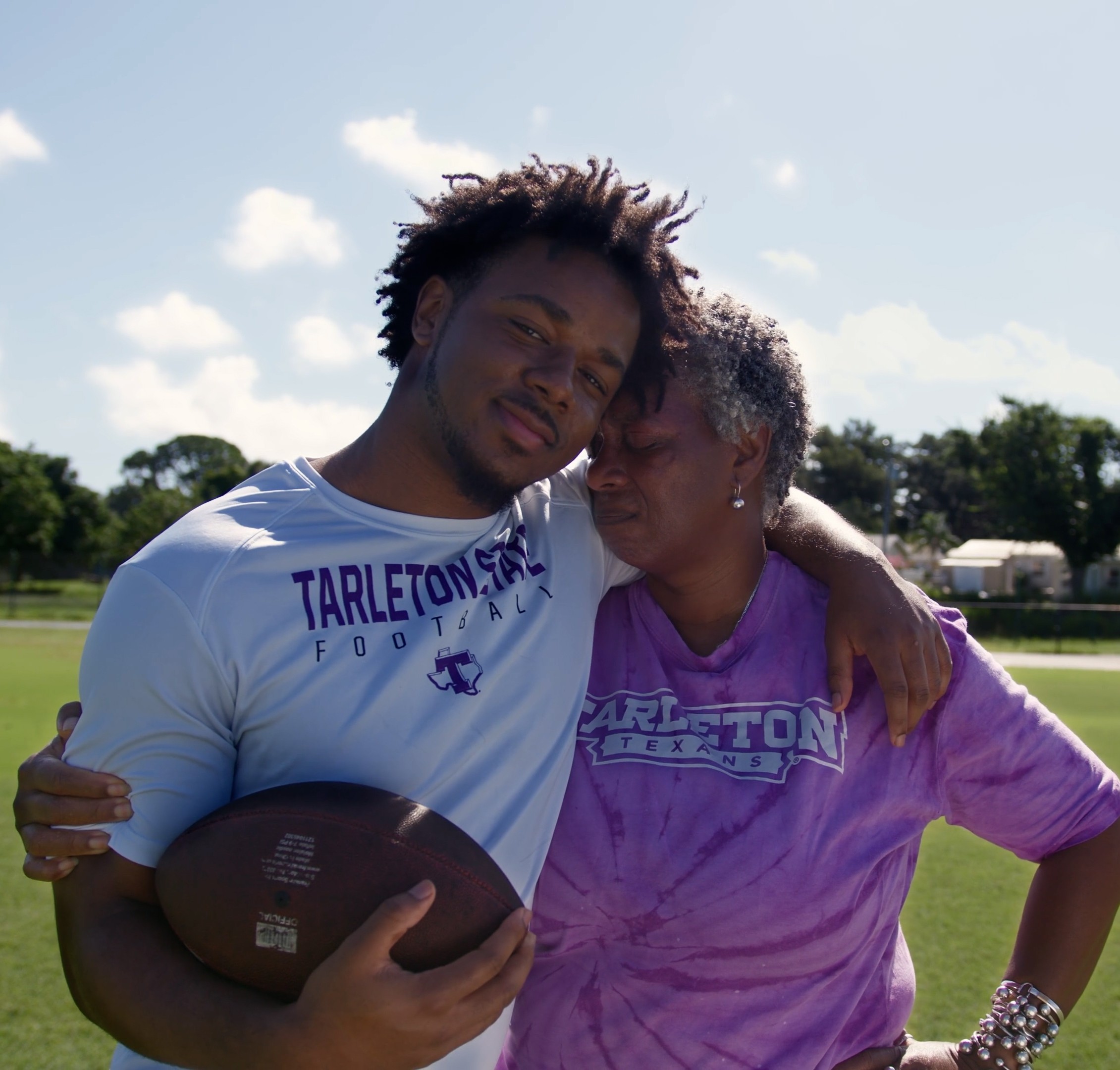
HCA Healthcare stroke survivor Derrel Kelley grew up on the football field. He had natural talent, but his commitment came from a true love of the game, the excitement of the crowds and the feeling of scoring a touchdown. By age 24, he had become a star running back at Tarleton State University in Texas and returned home to Florida to train for the NFL Combine.
One spring day during practice, Derrel noticed a pain in his leg. Like many athletes would, he pushed through it. The next day, he woke up from a midday nap to find he was unable to move the right side of his body. He struggled to get out of bed and find help before collapsing at the top of the stairs in his family home.
His mother, Buffie, still gets emotional when she recalls finding him unable to move or speak. She immediately called 911, and first responders took him to Pinellas County’s first comprehensive stroke center, HCA Florida Northside Hospital.
Testing showed that Derrel had bilateral pulmonary embolisms, a critical and life-threatening condition in which blood clots are present in both lungs and block blood flow. Some of the clots had broken off and traveled to his brain, causing an ischemic stroke.
Derrel underwent emergency surgery to remove the clots. His neurosurgeon Dr. Christopher Koebbe said, “When the team got the call that a person of his young age was having a stroke, I think we all said, ‘this isn’t possible,’ but it was possible and the imaging proved it.” Dr. Koebbe and his team quickly jumped into action by accessing Derrel’s femoral artery in the groin area and using microscopic tools to reach the clots in his lungs and brain. After a week and a half at the hospital, Derrel’s ability to move and walk had improved, as well as his speech, and he was able to return home. As he continues to recover, his future as a professional athlete is uncertain. However, Derrel’s love for football remains, and he and his family are looking forward to all the possibilities his future holds.
Tennessee father turns stroke recovery into support for others
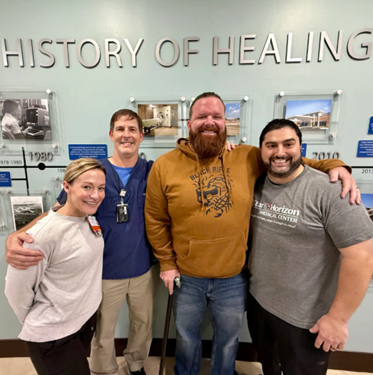
Dean Gooding was enjoying a quiet weekend camping with his wife and two daughters at a Tennessee state park when everything changed. The 37-year-old father stepped inside the family’s camper to grab a bowl when he suddenly felt intense pressure in his head.
“It felt like the sky fell,” he said. “Like a massive weight had settled on my head. I fell into the countertop, and I knew something was wrong.”
Dean was rushed to HCA Healthcare’s TriStar Horizon Medical Center in Dickson, Tennessee, where he was diagnosed with a lateral medullary stroke — a rare and serious type of stroke that affects the brainstem. While in the hospital, Dean’s comprehensive care team brought together colleagues from many departments, including the emergency room, acute care unit and inpatient rehabilitation unit.
Two days after the stroke, doctors warned Dean that he might never walk again. Though the news was difficult to process, he stayed focused on his wife and two daughters. With his sights set on what mattered most, he was determined to walk again with the help of his inpatient rehab team.

“When I took my first steps without assistance — no walker, no cane — I knew things would be okay,” Dean said. “I could do this.” It was a powerful moment that brought everyone to tears.
Dean returned home just 14 days after his stroke, but his recovery continued. He credits his successes to his physical therapist, Rich, and the rest of his care team. “I could never have done this without the team at TriStar Horizon Medical Center.”
Through joining the hospital’s Stroke Support Group, Dean discovered a passion for advocating for stroke survivors. He now volunteers his time sharing his story, listening to others and helping ensure no survivor feels alone on their journey.
Today, Dean walks with a cane featuring his nickname, Thor — a symbol of the strength and determination that helped him to beat the odds.
Read more about Dean’s story: A stroke at 37 changed everything. Dean’s determination rewrote the ending.
California stroke survivor returns to the hospital that saved her life as a volunteer
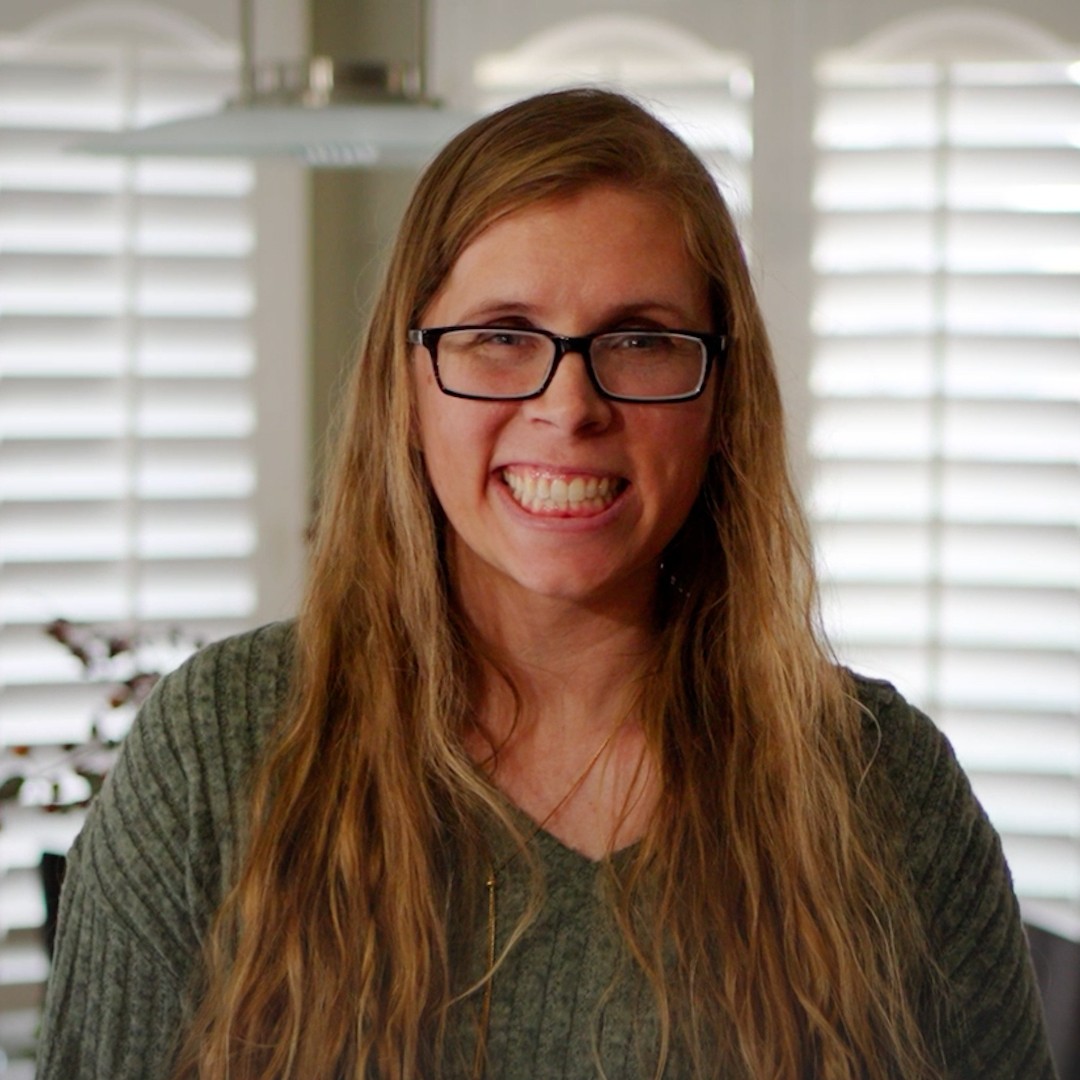
Amanda Salgado was a full-time doctoral student when she suffered a stroke after a late night of studying. In the morning, her mother, Cheryl, came to check on her and found her on the floor. Suspecting a stroke, Cheryl asked first responders to take Amanda to Riverside Community Hospital, one of HCA Healthcare’s comprehensive stroke centers.
“I felt numb not knowing what was going to happen, but very grateful that we had the staff to get us through it,” Cheryl said. “I felt like she was in wonderful hands.”
Clinicians at Riverside Community Hospital quickly identified Amanda as having a stroke. She was quickly taken into surgery where part of her skull had to be removed to allow space for swelling caused by damage to brain tissue from the stroke.
Amanda spent 17 days at the Riverside, California hospital recovering from the stroke and surgery. Once she was strong enough, she began the next phase of recovery, spending seven weeks in a rehabilitation facility. Like many other stroke survivors, Amanda had to relearn and practice basic functions, including speech and movements needed for self-care and activities of daily living.
Stroke recovery can be a long process, but nearly six years later, Amanda has returned to school and now volunteers at Riverside Community Hospital with stroke patients. For new stroke survivors and their families, her presence can provide hope, and her story helps support patients facing their own recovery journey.
“I go talk to the current stroke patients and their families, hoping that that’ll kind of give them some peace of mind in those early days,” said Amanda. Both Amanda and Cheryl feel incredibly grateful for the care that not only saved Amanda’s life but also allowed her to regain parts of her normal life and has brought them closer together.
A CNA lesson helped this Utah teen identify her own stroke
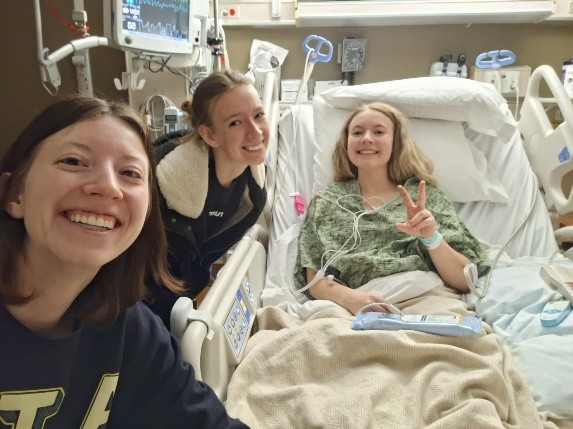
After recognizing her own stroke symptoms using skills she learned in CNA training, Gretl Talbot received lifesaving care at HCA Healthcare’s Mountain View Hospital. Her sisters stayed by her side throughout her recovery.
During her senior year at Payson High School in Utah, 18-year-old Gretl Talbot decided to jumpstart her career readiness by completing certified nursing assistant (CNA) training. CNAs are a critical part of clinical care teams, working alongside nurses to assist patients with their daily needs and monitor patients’ status.
Just a few months later, a lesson on recognizing stroke symptoms became personal. Gretl first noticed numbness in her hand and realized she couldn’t move it. Despite her age and having no known risk factors, she knew she needed to act quickly. Remembering the symptoms she had learned in class, she looked in the mirror and saw her smile drooping on one side. Gretl called to her sister for help and though her speech was slurred, her message was clear: “Stroke!”
She was taken to HCA Healthcare’s Mountain View Hospital in Payson, Utah, where the doctors administered tenecteplase (TNK) to help dissolve blood clots. Her symptoms started to improve with the medication.
Doctors in the intensive care unit later identified the cause of her stroke: a small hole in her heart, one that typically closes at birth. Doctors suspect the clot was able to use the hole as a pathway to the brain, causing the stroke.
Gretl now uses her own experience to educate others about stroke awareness. “I want this to help bring about brain awareness and let others know about the B.E. F.A.S.T. acronym, so that if someone has a stroke at a young age, they will be able to help save their own life, too,” she said.
Inspired by the care she received, Gretl wrote down the first names of every nurse who treated her. The care teams in the ER and ICU at Mountain View Hospital didn’t just treat Gretl’s stroke or diagnose her dangerous heart condition, they helped educate and shape her future by deepening her interest in a healthcare career. After graduation, Gretl plans to attend Southern Utah University to study nursing or physical therapy, the lifesaving professions that helped ensure she has healthier tomorrows ahead.
You may also like...


About HCA Healthcare
HCA Healthcare, one of the nation's leading providers of healthcare services, is comprised of 189 hospitals and more than 2,600 ambulatory sites of care, including surgery centers, freestanding emergency rooms, urgent care centers and physician clinics, in 19 states and the United Kingdom. Our approximately 320,000 colleagues are connected by a single purpose — to give patients healthier tomorrows.
As an enterprise, we recognize the significant responsibility we have as a leading healthcare provider within each of the communities we serve, as well as the opportunity we have to improve the lives of the patients for whom we are entrusted to care. Through the compassion, knowledge and skill of our caregivers, and our ability to leverage our scale and innovative capabilities, HCA Healthcare is in a unique position to play a leading role in the transformation of care.
Recent articles