

Article
HCA Healthcare Nursing Research Day 2026 showcases nurse-led research that advances safer care


TAGS:
Share:
By Erica Rossitto, Senior Vice President and Chief Nurse Executive, HCA Healthcare

At HCA Healthcare, we partner closely with our nurses and listen to their voice and expertise as clinical leaders, innovators and advocates who help drive safer patient care. In my role as a nurse leader, I have seen firsthand how some of the most meaningful advances in patient safety begin with a nurse asking a simple but powerful question at the bedside.
Every day, nurses are among the first to recognize subtle changes in a patient’s condition, identify emerging risks and act to improve patient outcomes. Those observations help shape nurse-led research, turning everyday clinical insights into evidence-based improvements that can benefit patients across the country.
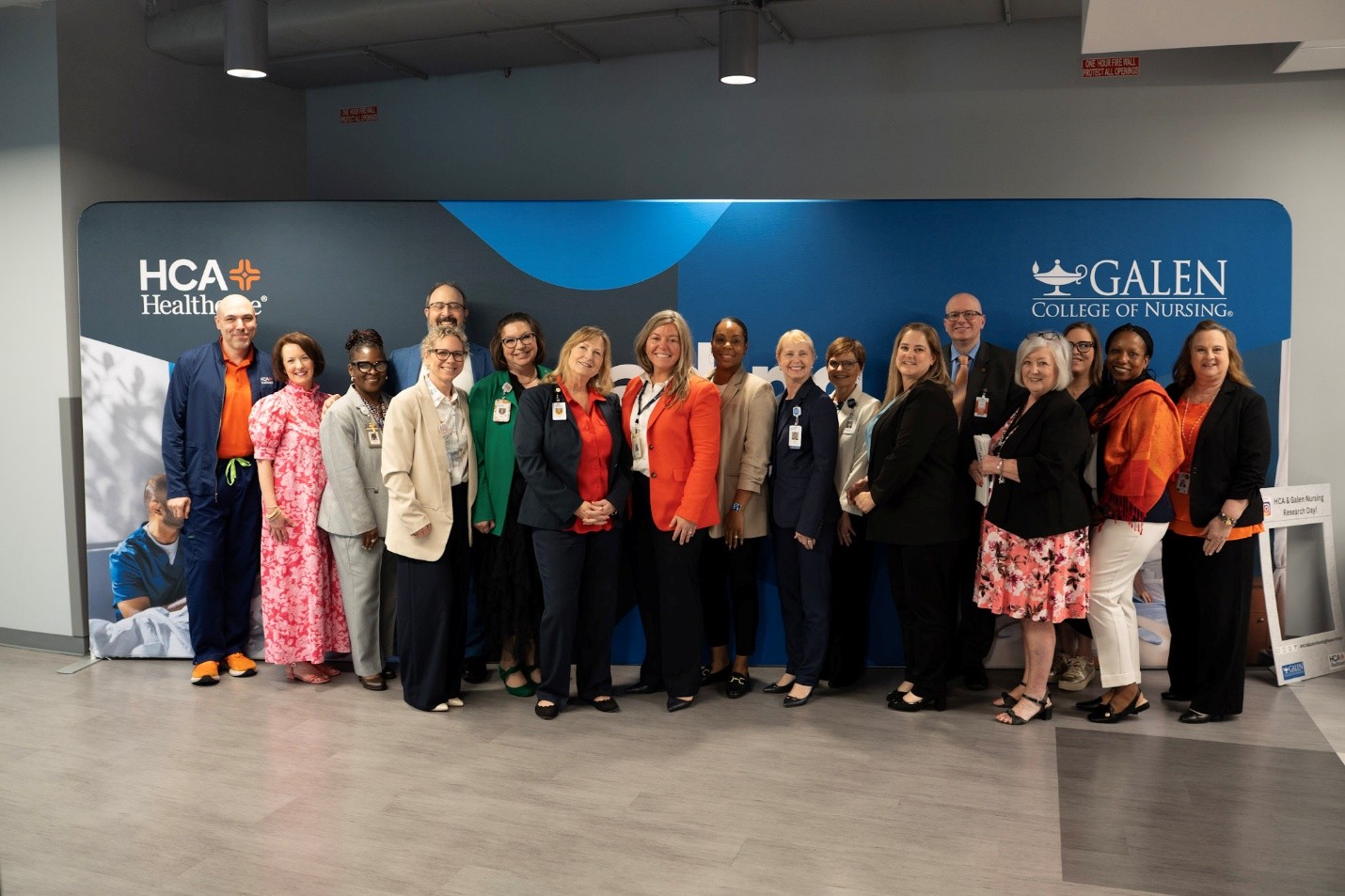
This year, HCA Healthcare hosted its second annual Nursing Research Day in collaboration with Galen College of Nursing, bringing together more than 600 nurses in the U.S. and U.K., students, faculty and leaders from across our organization, along with nursing students from Pepperdine University, Vanderbilt University and Belmont University.
The Nursing Research Day showcased how evidence-based practice and nurse-led research are helping to shape the future of healthcare, while underscoring our ongoing commitment to sharing what we learn with the broader healthcare community. Through externally published research, presentations at national forums and large-scale, real-world studies, nurses and nurse leaders are helping identify best practices that can improve care across HCA Healthcare and beyond.
“Nurse-led research has never been more important. Nurses bring a uniquely practical and patient-centered perspective to identifying risks, improving workflows and helping organizations adapt and improve patient outcomes.”
Erica Rossitto, Senior vice president and Chief Nurse Executive, HCA Healthcare
As part of HCA Healthcare, Galen College of Nursing plays a critical role in preparing the next generation of nurses. Since joining the HCA Healthcare family in 2020, Galen College of Nursing has become one of the nation’s largest nurse educators, helping strengthen the nursing pipeline while creating new opportunities to integrate research, education and clinical practice. Together, we are building new models of nursing education that connect classroom learning with real-world patient care.

Nursing research starts at the bedside
Throughout my career, I have seen nurses identify subtle risks or workflow challenges long before they appear in formal data. That perspective is one of nursing’s greatest strengths — and one reason nurse-led research is so essential to advancing patient safety.
Nursing research often begins with a simple question rooted in patient care. A nurse notices a pattern. A colleague identifies an opportunity to improve a process. A care team asks why something happened and whether it could be done differently next time. That cycle of observation, investigation and improvement is what drives nursing research.
With more than 47 million annual patient encounters and 100,000 nurses across HCA Healthcare’s hospitals and additional sites of care, we have both an opportunity and a responsibility to advance nurse research, learning from our experiences, studying our practices and sharing those findings to improve systems of care for the patients and communities we serve.
Bringing Nurse Forward to life
Nurse-led research is a key part of HCA Healthcare’s Nurse Forward strategy, which focuses on leadership and advocacy, clinical education, dynamic care teams and care-first culture. We bring that strategy to life by investing in our people, leveraging technology and innovation and strengthening integration and partnerships. Through research, nurses are helping turn that strategy into action — identifying opportunities to improve care, strengthen teams and advance patient safety.
Investing in people
Creating a strong culture of clinical inquiry requires more than encouraging research — it requires investing in nurses as scholars, leaders and change agents. By investing in nurses’ development, HCA Healthcare helps create an environment where clinical questions can become research opportunities and research findings can lead to better practice.
The research presented during Nursing Research Day demonstrated how focused improvements can strengthen patient outcomes, colleague engagement and clinical workflows. They also reflected the role nurses play in identifying practical solutions that can be studied, shared and applied across care settings.

Leveraging technology and innovation
Emerging technologies, including artificial intelligence (AI), are creating new opportunities to better understand clinical complexity and support nursing practice. As healthcare continues to evolve, I believe one of our greatest responsibilities is ensuring technology strengthens human connection at the center of nursing care.
When guided by care team input, innovation can help teams identify patterns at scale available through HCA Healthcare’s network and streamline decision-making to support safe, effective care. Nurse-led research plays an important role in that process by ensuring new tools are effective and give nurses more time to focus on delivering quality patient care and meaningful human connection.
Strengthening integration and partnerships
Strong partnerships help turn research into meaningful action. Through the integration of HCA Healthcare and Galen College of Nursing, we are creating more opportunities for nurses, educators and students to learn from one another, study real-world challenges and apply evidence in ways that strengthen care delivery.
This connection between clinical practice, nursing education and research helps prepare nurses to meet evolving patient needs while also helping develop future nurse leaders, all while doing our part to move healthcare forward.
Spotlight on nurse-led research in action
The following projects represent just a snapshot of the innovative work presented during HCA Healthcare’s 2026 Nursing Research Day. Selected by colleagues as award-winning projects, these studies highlight the impact of collaboration between HCA Healthcare nursing teams and Galen College of Nursing faculty and students.
HCA Healthcare nurse-led research project: “Dementia Care Bundle”
Led by: Lauren Majek, MSN, RN, PCCN, clinical support coordinator, Medical City Lewisville, and Juliet Lopez, BSN, RN, PCCN, clinical nurse coordinator, Medical City Lewisville
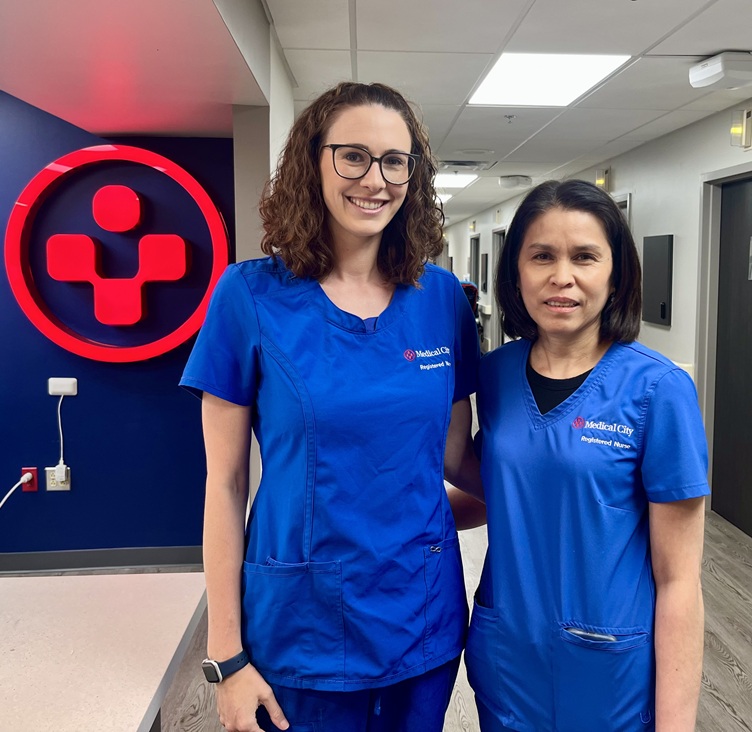
The challenge: As the population ages, healthcare organizations across the country are caring for a growing number of patients living with dementia and other forms of cognitive impairment. Patients living with dementia often experience increased confusion, anxiety and complications during hospitalization, creating additional challenges for care teams and patients alike. HCA Healthcare colleagues at Medical City Lewisville sought to identify more consistent, evidence-based, patient-centered approaches that could improve the care experience, strengthen safety and better support individuals with cognitive impairment in acute care settings.
What was tested: Researchers implemented an evidence-based dementia care bundle designed to standardize interventions and support more consistent, patient-centered care for individuals with dementia. The project explored how targeted strategies could improve communication, reduce distress and create safer care environments.
What nurse researchers are seeing: Initial findings indicate that structured dementia care approaches lead to reductions in sedative medication administration.
Why it matters to nurses: Nurses frequently care for patients with dementia across a wide range of clinical settings. Providing nurses with evidence-based tools and standardized approaches can help improve care delivery while supporting both patients and caregivers.
What’s next: The research team plans to continue studying outcomes associated with the dementia care bundle and explore opportunities to expand implementation across additional care settings.
“Clinical nurses play an important role in health care improvement because they provide direct patient care every day. Nurses identify gaps in care, ask important questions and help drive meaningful change. Evidence-based practice involves using proven interventions from research and applying them at the bedside to improve patient outcomes. Nursing is the heart of healthcare, and nurses’ voices are essential to patient safety, advocacy and continuous improvement.”
Juliet Lopez, BSN, RN, PCCN, Clinical Nurse Coordinator, medical city lewisville
Galen student nurse-led research project: “Foundation of Safety — Empowering Faculty to Build a Culture of Safety”

Led by: Sarah Woodward, Galen College of Nursing, and Rebekah Randall, Galen College of Nursing
The challenge: As the healthcare industry becomes more complex, nursing programs across the country are working to ensure future nurses are prepared to recognize risk, communicate concerns and contribute to a strong culture of patient safety from the beginning of their careers. Nursing faculty play a critical role in shaping those behaviors and expectations, yet approaches to safety-focused education can vary across learning environments nationwide. The Galen College of Nursing research team sought to better understand how faculty development and engagement could strengthen consistency in safety-focused nursing education and better prepare nursing students for real-world clinical practice.
What was tested: The project focused on equipping faculty with tools, resources and strategies designed to reinforce a culture of safety within nursing education. Researchers evaluated how intentional faculty engagement, education and collaboration could improve consistency in safety-focused teaching and better prepare nursing students for real-world clinical environments.

What nurse researchers are seeing: Early findings suggest that empowering faculty to lead safety-centered education can strengthen confidence, improve communication around patient safety and create more consistent approaches to clinical learning.
Why it matters to nurses: A strong culture of safety begins long before nurses enter practice independently. Supporting faculty development helps ensure future nurses are prepared to recognize risks, advocate for patients and contribute to safer care environments from the start of their careers.
What’s next: The team plans to continue evaluating how faculty-led safety initiatives influence student learning outcomes and clinical readiness while identifying opportunities to expand safety education models across nursing programs.
A culture of inquiry that advances safer care
The projects presented during Nursing Research Day reflect something larger than individual studies — they represent a culture of curiosity, collaboration and continuous improvement.
Every protocol, checklist and escalation pathway started with a question. What can we learn, and how can we make care safer?
At HCA Healthcare, we encourage nurses to be inquisitive, challenge assumptions and look for opportunities to improve care. By studying our own practices, we can better anticipate risk, recognize patterns and develop evidence-based solutions that improve safety for patients and colleagues alike.
I believe that the future of healthcare will be shaped by organizations that empower nurses not only to deliver care, but to help design it. Nursing research has the power to create transformative impact, moving frontline observations into action — and action into safer care for millions of patients.
You may also like...


About HCA Healthcare
HCA Healthcare, one of the nation's leading providers of healthcare services, is comprised of 189 hospitals and more than 2,600 ambulatory sites of care, including surgery centers, freestanding emergency rooms, urgent care centers and physician clinics, in 19 states and the United Kingdom. Our approximately 320,000 colleagues are connected by a single purpose — to give patients healthier tomorrows.
As an enterprise, we recognize the significant responsibility we have as a leading healthcare provider within each of the communities we serve, as well as the opportunity we have to improve the lives of the patients for whom we are entrusted to care. Through the compassion, knowledge and skill of our caregivers, and our ability to leverage our scale and innovative capabilities, HCA Healthcare is in a unique position to play a leading role in the transformation of care.
Recent articles
