

Article
HCA Healthcare’s 2026 STOP THE BLEED® Month efforts train more than 4,150 people in lifesaving skills


TAGS:
Share:
Key takeaways:
- HCA Healthcare trained more than 4,150 colleagues and community members during National STOP THE BLEED® Month in May 2026.
- Sixty HCA Healthcare facilities, along with corporate and division offices, hosted more than 140 coordinated training events.
- STOP THE BLEED® teaches three core bleeding-control techniques: applying direct pressure, packing a wound and using a tourniquet.
- Many HCA Healthcare hospitals offer free STOP THE BLEED® classes throughout the year.
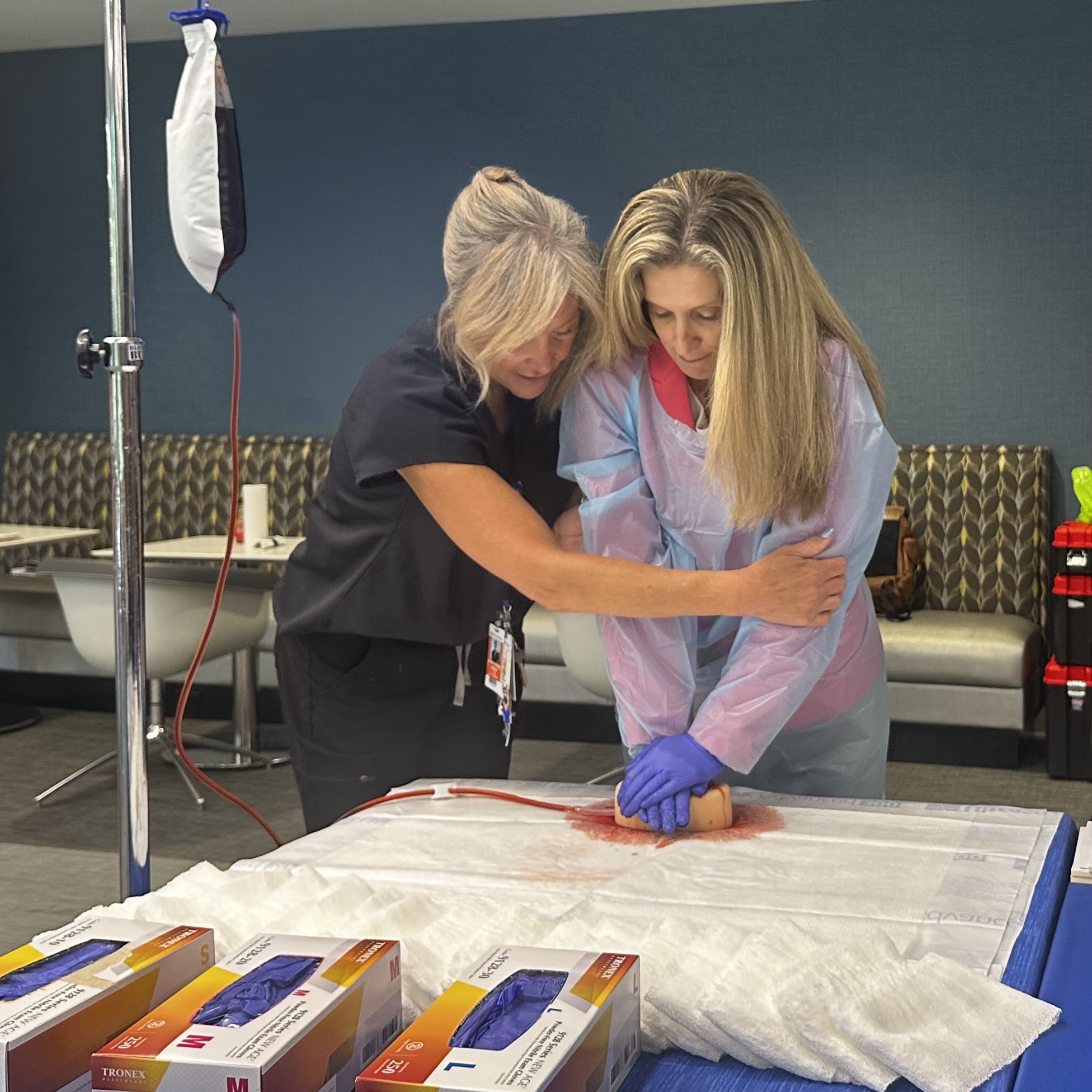
When someone is experiencing life-threatening bleeding, every second counts — and the person most likely to save their life may be standing nearby.
That is why HCA Healthcare is helping colleagues and community members gain the confidence and skills to respond before emergency medical services arrive through STOP THE BLEED®, a nationwide campaign developed by the American College of Surgeons that teaches people how to recognize and control severe bleeding. The free training teaches people with no medical background the skills to respond during the critical minutes before emergency responders arrive.
During National STOP THE BLEED® Month in May 2026, 60 HCA Healthcare facilities, along with corporate and division offices, hosted more than 140 coordinated training events that taught lifesaving bleeding-control techniques to more than 4,150 colleagues and community members.
Led by HCA Healthcare clinicians, participants practiced the program’s three core bleeding-control techniques through hands-on demonstrations and simulation exercises. Globally, the STOP THE BLEED® program has trained nearly 5 million people since it was launched by the American College of Surgeons.

“STOP THE BLEED® is about extending preparedness beyond the walls of the hospital. By bringing this training to colleagues and community members, HCA Healthcare is helping more people feel equipped to respond in an emergency — strengthening the safety and resilience of the communities we serve,” said Tracy McDonald, vice president of trauma, burn and reconstructive surgery at HCA Healthcare.
As one of the nation’s leading providers of trauma care, HCA Healthcare cares for patients with serious injuries every day at hospitals across our network. Care teams understand that survival from severe bleeding often depends on the actions taken in the first few minutes after an injury, before a patient ever reaches the hospital.
How STOP THE BLEED® training can save lives
Summer is often referred to by trauma surgeons as “trauma season.” With more time on the road and increased participation in outdoor and recreational activities, first responders and emergency rooms typically see an increase in serious injuries during the warmer months, making it an especially important time for community members to learn how they can help save lives during a bleeding emergency.
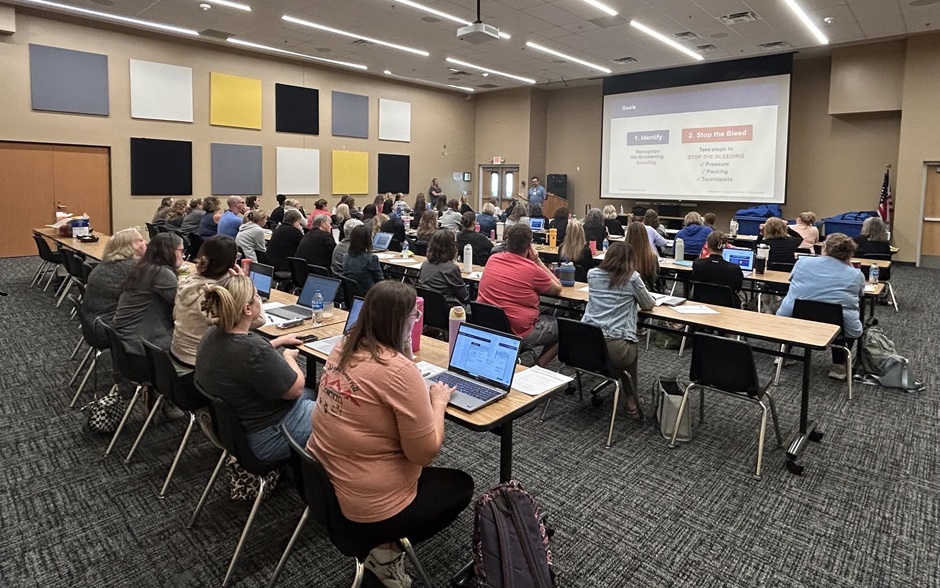

Severe bleeding is one of the most time-sensitive emergencies trauma teams encounter, and there is sometimes only a small window to intervene before blood loss becomes fatal. According to the American College of Surgeons, uncontrolled bleeding is a leading cause of preventable death after a traumatic injury. In some cases, a person can die from severe blood loss within minutes, underscoring why immediate action from a bystander can be critical.
For Dr. Darrell Hunt, trauma medical director of HCA Healthcare’s TriStar Division and TriStar Skyline Medical Center, the importance of bystander intervention is something he sees firsthand in the trauma bay.
“I have seen how those first moments after an injury shape what happens next. When bleeding is controlled at the scene, patients arrive with a stronger chance at recovery. When it is not, even the most advanced tools and treatments can be working against the clock,” said Dr. Hunt.
Through practical, hands-on instruction, STOP THE BLEED® training teaches participants three evidence-based bleeding-control techniques — applying direct pressure, packing a wound and using a tourniquet — so they can respond quickly and confidently during a severe bleeding emergency. These simple interventions are designed to stabilize the injured person and control the bleeding long enough for them to receive definitive trauma care. Health leaders increasingly advocate for bleeding-control education to become as common as CPR, helping build safer, more prepared communities.
Beyond the May training events, many HCA Healthcare hospitals offer free STOP THE BLEED® education courses throughout the year, helping community members build confidence before an emergency happens. By expanding access to this training, HCA Healthcare is helping more communities gain lifesaving emergency preparedness skills.
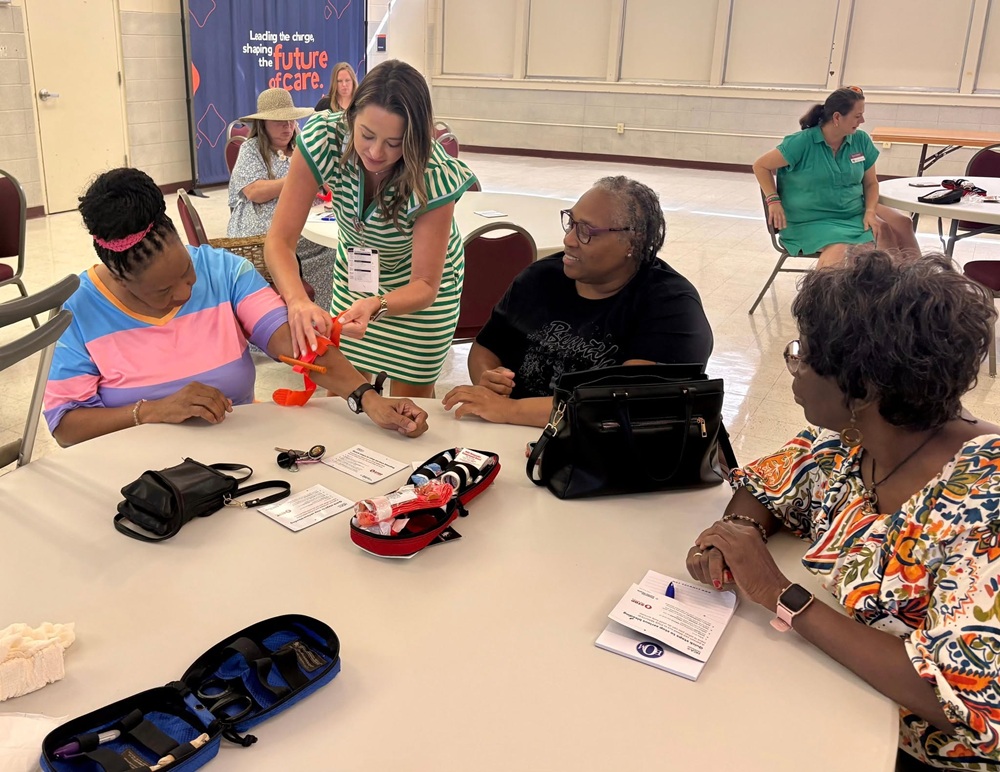
Interested in taking a free STOP THE BLEED® class? Visit the American College of Surgeons’ website to find training opportunities near you.
How STOP THE BLEED® training made a lifesaving difference after a motorcycle crash
At Eastern Idaho Regional Medical Center, an HCA Healthcare hospital and Level II trauma center in Idaho Falls, Idaho, the impact of STOP THE BLEED® training became clear in July 2024, when a devastating motorcycle crash unfolded in front of STOP THE BLEED® graduate Jake Allred.
Years earlier, Jake had witnessed a violent incident and remembered feeling unprepared to help. The experience left a lasting impression and prompted him to seek emergency response training through STOP THE BLEED® classes at Eastern Idaho Regional Medical Center. He also made a habit of keeping a kit with a tourniquet in his car.
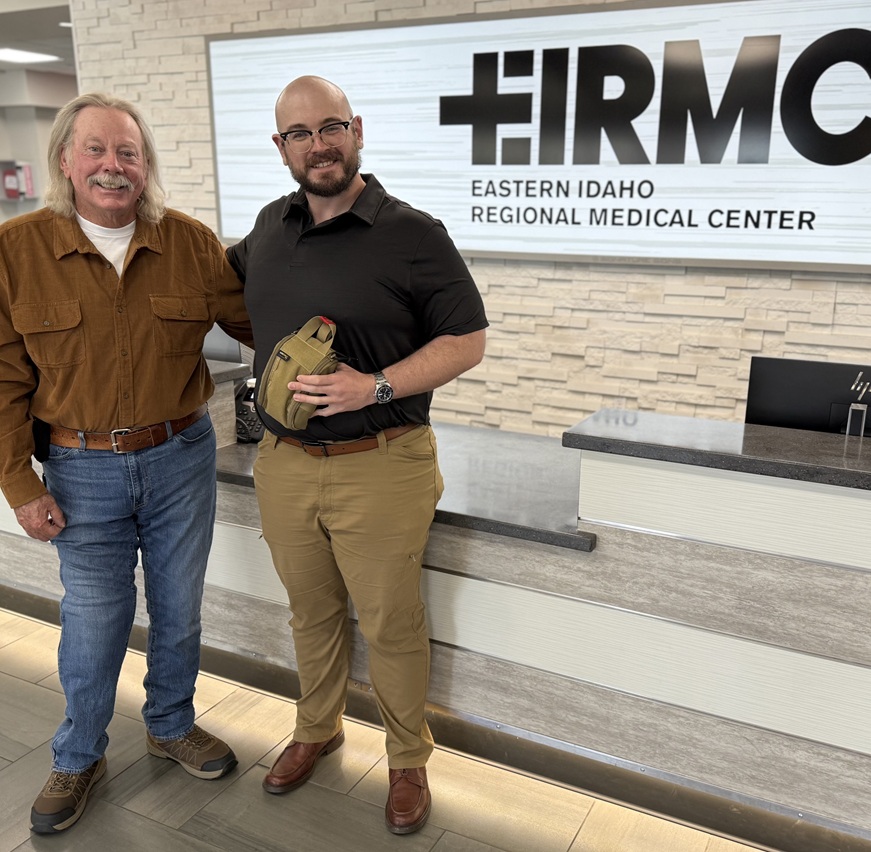
On July 17, 2024, that preparation proved critical. Veteran Fred King was riding home on his motorcycle when a car turned into his path, causing a crash that resulted in the partial loss of his leg.
“The only thing I could do was lock the brakes on the bike,” Fred said. “I played astronaut, and the landing was a little rough.”
As bystanders rushed to help, one person used a belt as a makeshift tourniquet. Jake quickly recognized that Fred needed more effective bleeding control. Drawing on his training, he retrieved his STOP THE BLEED® kit from his car and helped replace the belt with a more stable tourniquet, controlling Fred’s catastrophic bleeding until first responders arrived.
“My training from STOP THE BLEED® automatically kicked in,” Jake said. “I didn’t even have to think about it.”
Fred was taken to Eastern Idaho Regional Medical Center, where trauma teams worked to save his life. Although part of his leg was amputated, Fred survived because of the quick actions of bystanders and the care he received afterward. “I rolled over and saw that my leg was gone,” Fred said. “I said a few choice words, passed out and woke up the following Tuesday in the intensive care unit at Eastern Idaho Regional Medical Center.” Fred credits the bystanders who stepped in that day with giving him the chance to reach the hospital.
“If it weren’t for those two gentlemen, I wouldn’t have made it to the hospital,” Fred said.
From there, HCA Healthcare trauma, critical care and rehabilitation colleagues at Eastern Idaho Regional Medical Center helped Fred begin the long road to recovery. He spent a week in the intensive care unit followed by eight weeks in the hospital’s inpatient rehabilitation unit, where care teams helped him regain his independence and learn to walk again with a prosthetic leg.
“The people at the hospital, the doctors, the rehab people, they were all wonderful,” Fred said. “They taught me how to use a wheelchair and got me started walking again.”
In a remarkable full-circle moment, Jake later learned that the instructor who taught his STOP THE BLEED® class was Fred’s niece — meaning the training she provided ultimately helped save her own family member’s life.
Today, Fred has returned to the road.
“I bought a bike over the computer and had it delivered. Just seeing it parked where my old bike used to be made the depression go away,” he said. “It brought me back to life… As soon as I start the bike up, I get a big smile on my face and I say, ‘yeah baby — let’s go!’”
Fred’s recovery is a powerful reminder of why HCA Healthcare invests in STOP THE BLEED® training and education. Every training event equips another potential bystander with the knowledge and confidence to act during life’s most critical moments — helping strengthen emergency preparedness in the communities HCA Healthcare serves.
You may also like...


About HCA Healthcare
HCA Healthcare, one of the nation's leading providers of healthcare services, is comprised of 189 hospitals and more than 2,600 ambulatory sites of care, including surgery centers, freestanding emergency rooms, urgent care centers and physician clinics, in 19 states and the United Kingdom. Our approximately 320,000 colleagues are connected by a single purpose — to give patients healthier tomorrows.
As an enterprise, we recognize the significant responsibility we have as a leading healthcare provider within each of the communities we serve, as well as the opportunity we have to improve the lives of the patients for whom we are entrusted to care. Through the compassion, knowledge and skill of our caregivers, and our ability to leverage our scale and innovative capabilities, HCA Healthcare is in a unique position to play a leading role in the transformation of care.
Recent articles